What is skiing? If you'd asked me before I started working in industrial equipment, I'd have said something quick: it's sliding down a mountain on two boards. That answer isn't wrong. It's just incomplete.
In my world, 'alpine' isn't a sport. It's an environment. It's cold, remote, and unforgiving. Roads close. Weather windows shrink. Equipment failures don't happen at convenient times. I'm a logistics coordinator at Alpine, a company that supplies equipment for high-altitude mining and energy operations. I've spent eight years getting parts and machines to places where winter is a serious adversary. This is the story of one of those orders.
The call that changed how I think about rush orders
It happened on a Friday in February 2024. At 1:47 p.m., a mine manager called. His crusher had stopped. Not slowed down — stopped.
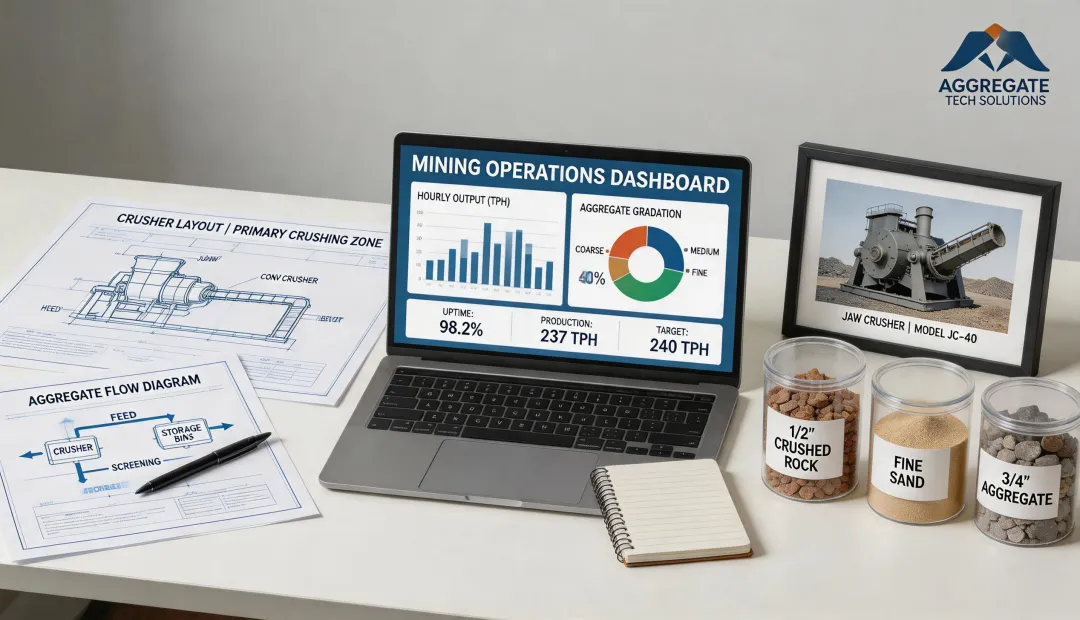
The bearing assembly on the main drive had failed. Normal lead time for that assembly: 10 to 14 days. The mine manager had three days until the county road closed for the season. If the part didn't arrive before that, the mine would sit idle for weeks. Missing that deadline would have meant a lot more than a late shipment. It would have meant layoffs, contract penalties, and a long, cold month of trying to find work for a crew with no ore to process.
A crusher is a very hungry machine. When it stops, the whole site backs up. Trucks wait. Stockpiles shrink. The maintenance team sits around with nothing to do except watch the weather.
The first piece of good news: we had the bearing assembly in stock. Not at our main warehouse, but at a depot 420 miles away. It could be trucked overnight.
Then our warehouse supervisor checked the part number against the serial number of the crusher. The numbers didn't match. The crusher had been rebuilt in 2022, and the contractor who did the rebuild had installed a different spec. The new part in our inventory wasn't the part we needed.
We had spent the first hour thinking we were fine. That was the frustrating part.
I still kick myself for not pulling the service history during that first call. If I had, we'd have saved an hour. That hour matters when a road closes at 3 p.m.
Finding the right part took another four hours. We called three distributors, two salvage yards, and a manufacturer's rep who answered his phone while skiing. That last call was the one that got us the Montana lead. The part existed. We just needed to move it before the road closed.
The fix came from two directions. First, a supplier in Germany had the exact bearing assembly. It was sitting on a shelf, five time zones away, but they had a US distributor in Montana, 190 miles from the mine. Second, the mine manager asked if Alpine could sponsor a training course for his maintenance crew. The contractor who did the rebuild had never given them the updated spec. We agreed. A one-day course on spec verification and winter startup procedures wouldn't fix the bearing overnight, but it could stop the same mistake from happening again.
The fastest way to get the part from Montana to the mine wasn't a commercial freight lane. It was a courier in a four-wheel-drive automobile. The courier had a Ford F-350 with a snow plow still on the front. Not ideal, but workable.
The route had one tricky section. A creek crossing had washed out part of the shoulder, and the courier had to ford a shallow overflow to get around it. He called us at 4:10 a.m. Sunday to say he was through.
Total cost: $2,600 in rush freight and courier fees, on top of the $4,100 base cost of the part. Pricing as of February 2024. Rates change with fuel and season, so don't hold me to those exact numbers.
The maintenance crew installed the bearing by noon Sunday. The crusher started up one hour later. The mine passed its final road-close check at 1:30 p.m. Monday. We had 90 minutes to spare.
The alternative would have been a full shutdown until the pass reopened in late May. The lost production would have been measured in six figures, not thousands.
What this order taught me about service
People think rush orders cost more because the work is harder. That's not quite right. They cost more because they're unpredictable. They disrupt planned workflows. They require checking, re-checking, and paying for the luxury of not waiting.
There's a simpler way to think about it. 'Just get it faster' is not a strategy. The real question is: do you know exactly what needs to arrive, where it is, and whether it fits? Speed without certainty is just a faster way to fail.
To be fair, Alpine is not the right supplier for every rush order. If your site is at low altitude, roads are open, and your maintenance records are clean, you probably don't need a specialist who thinks about road closures and frozen grease fittings. You need whoever can ship the part first. But if your operation is truly alpine—high, cold, remote—the supplier evaluation changes. The cheapest quote isn't the lowest total cost. What I mean is that the 'cheapest' option isn't just about the sticker price—it's about the total cost including your time spent managing issues, the risk of delays, and the potential need for redos.
Since that order, we've added a rule: for any site above 2,000 meters, we keep a copy of the actual installed specifications, not just the original part number. It costs us time to maintain. It saves us catastrophe. Based on our internal data from 400+ rush jobs, the orders that fail aren't the ones with short deadlines. They're the ones where nobody verified the spec before the courier left.
Bottom line: for alpine sites, a guaranteed delivery window is worth more than a low quote.
One more thing. If you landed here because you were searching for 'alpine spine and orthopedics reviews,' you're probably not looking for a mining equipment story. Search engines can be like that. But the point is relevant: when people evaluate a medical practice, they read reviews. When they evaluate an equipment supplier, they should ask the same kinds of questions. What happens when something goes wrong? Who answers the phone? What proof exists beyond the website?
So, what is skiing? It's a sport. It's also a reminder. The mountains are beautiful and dangerous. People who work there need suppliers who understand the difference. At Alpine, that's what we do.