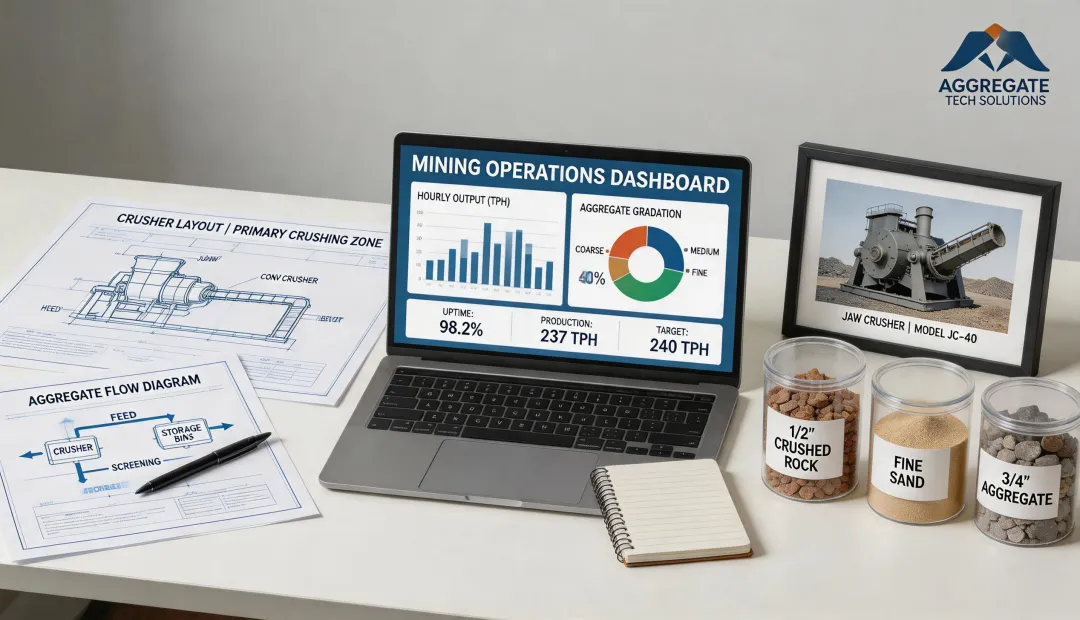
It Started With a 3 AM Phone Call
Tuesday, January 2025. 3:14 AM. My phone lit up with a number I didn't recognize. I answered anyway—in this industry, silence costs you contracts. On the other end, a site manager from a remote copper mine in the Lewis region. They had a catastrophic failure on a primary conveyor drive. The part they needed? A specialized gearbox assembly that we'd delivered to them six months earlier.
"Can you get a replacement here by Friday?" he asked. It was Tuesday. The mine is a 14-hour drive from our distribution center in Divide, Colorado. Normal turnaround on that assembly: eight working days. This wasn't just urgent—it felt impossible.
The First Question No One Wants to Ask
I didn't say "we'll do it" immediately. I didn't even say "I'll check." In my role coordinating emergency dispatches for mining equipment (six years now, not counting the three before that in military logistics), I've learned the most dangerous phrase is "we'll figure it out." Because what that usually means is: we haven't considered the consequences.
So I asked the question I've trained myself to ask before committing to anything: "What happens if we miss that deadline?"
There was a pause. Then: "They'll have to shut down the east face. Production loss of roughly $120,000 a day. Plus, my bonus gets shredded."
I appreciated the honesty. It helped me frame the decision.
The Math (Which, Honestly, Changed Everything)
I started running scenarios in my head. Standard shipping from our warehouse: 14 hours by truck. If we expedited the build—pulling parts from our own inventory, putting two shifts on it—we could cut manufacturing from 5 days to 36 hours. That's a Thursday afternoon pickup, delivery by Friday morning. Possible. Just.
But then there was the second part: what if something went wrong? What if the rush build had a QC issue? What if the truck broke down? What if the site wasn't ready for installation?
I shared my honest assessment with him: "We can hit Friday—but there's almost zero room for error. If you want a safety buffer, Monday is more realistic. Here's the trade-off: Friday costs $4,200 in rush fees (on top of the $14,500 base). Monday costs the standard shipping. Your call."
Lesson One: The Rush That Almost Broke Us
Two years earlier, I wouldn't have had that conversation. I would have said "absolutely, no problem" and then scrambled behind the scenes. That approach cost us once. Badly.
"I only believed in being honest about limitations after ignoring it and watching a $50,000 contract slip through our fingers."
We had a similar situation in 2023: a client in northern Nevada needed a hydraulic power unit in 48 hours. I said yes without checking availability. Turned out the exact model was out of stock. We managed to find a substitute from a dealer in Utah, but the unit was a slightly different configuration. The installation team on site couldn't adapt. The machine was down for four extra days. The client's operations manager called the VP at our company the next week, and we lost the renewal. All because I was too proud—or too scared—to say "I need to verify that."
The Alpine Difference (or: Why We Can Do Things Others Can't)
To be fair, there are reasons we can handle these situations that many suppliers can't. Our inventory includes a strategic reserve of components for our most-ordered systems (think: the gearbox, the motor mounts, the control modules). We maintain a relationship with a specialized freight carrier who knows how to haul 2,500-lb assemblies through mountain passes in winter conditions. And our manufacturing floor has a standing policy: expedited orders for critical infrastructure skip the regular queue.
But here's what I'd argue matters more: we've documented our failure modes. We keep a log of every rush order that went wrong and why. After 200+ emergency dispatches, we have data on which types of jobs are feasible and which are fantasies. Our internal rule is simple: no commitment without a feasibility check that considers the worst case, not just the best case.
The Second Unexpected Twist
Back to the Lewis mine story. We committed to Friday delivery. The build went smoothly. The truck left our facility at 5:43 PM Thursday, right on schedule. Then at 9:22 PM, I got a tracking alert: the truck had been pulled over for a DOT inspection near Glenwood Springs. Estimated delay: 3 hours.
In the old days, I'd panic. Instead, I called the client: "We hit a snag. Truck's in an inspection. ETA is now Saturday morning, not Friday. I'm sorry. I know that's still in time for your Monday shift change, but I wanted you to know before you woke up thinking it was solved."
He was irritated—but not surprised. "Appreciate the heads up. I've got a crew ready to install Sunday either way."
The Real Lesson (Which Isn't What You Think)
The part arrived Saturday at 11 AM. Installed Sunday. Monday morning, the east face was operational. Everyone was happy. The client even sent a photo of the gearbox installed, with a caption: "Thanks for being honest about the delay. Most companies would have stayed quiet."
That's the part I find satisfying: the trust that comes from not pretending. There's something genuinely rewarding about handling a crisis without making it worse by overpromising.
What Alpine's Logistics Taught Me
So, here's what I'd recommend if you're managing equipment supply for mining, drilling, or any operation where downtime costs serious money:
- Ask about consequences before you ask about timelines. The client's real need isn't "Friday delivery"—it's "avoid $120k/day shutdown." Those are different problems.
- Never promise what you can't verify. If your inventory system says 5 days, but your gut says "maybe 4 if we rush," go with the system. Gut feelings have a terrible track record (speaking from experience).
- Communicate bad news fast. A delay you warn about is a headache. A delay you hide is a betrayal.
This approach won't win every deal. I've had clients walk away because we couldn't meet their unrealistic timeline. That's fine. In my experience, those clients would have been the ones calling at 3 AM with a problem that was already our fault, even if we didn't cause it.
The Honest Bottom Line
If your operation uses alpine equipment in remote environments, I recommend working with a supplier who can handle emergencies. But more importantly, work with one who will tell you "no" when they can't. The worst partner isn't the one with longer lead times—it's the one who says "yes" to everything and then delivers nothing.
Personally, I'd rather lose a deal on day one than lose a client on day 100 because I was too afraid to say "I need to check." That's the lesson from that 3 AM phone call, from the lost $50,000 contract in 2023, and from every rush order I've handled since.