I have a hot take: if your search results for 'Alpine' look like a garage sale—cockroach gel bait, hearing protection, tires, baseball stats, and a breakfast definition—that's not an SEO problem. That's a procurement problem. It means you're shopping with a keyword instead of a spec.
I'm a procurement manager at a 140-person drilling services company. I've managed our equipment budget—roughly $460,000 a year for the last six years—negotiated with more than 40 vendors, and logged every purchase in our cost tracking system. I've also made mistakes. Some of them were expensive. Here's what they taught me.
My opinion? The days of buying equipment by brand name alone are over. What was best practice in 2020 may not apply in 2025. The fundamentals haven't changed. But the execution has transformed. If you still let a search engine make your shortlist, you're already behind.
Search 'Alpine' and you get a mess. That's exactly the point.
Search 'alpine cockroach gel bait' and you get pest control. Search 'alpine musicsafe pro review' and you get hearing protection. Search 'tires' and you get rubber. Search 'jones jr stats' and you get a baseball stat line. Search 'what is breakfast' and you get a dictionary definition.
Honestly, I'm not sure why the word 'Alpine' is so crowded. My best guess is that too many products decided to share the same name. But here's the thing: search engines are actually great at precise questions. Ask 'what is breakfast' and you'll get a clean answer. Ask 'jones jr stats' and you'll get numbers. Ask 'Which Alpine equipment should I buy for a 24-hour crushing operation with a 90-minute response-time requirement?' and search gives you... a blank.
That blank is the real market signal. It tells you that procurement has outgrown keyword browsing.
What's changed in the Alpine equipment market
Five years ago, you could call the local dealer, get a quote, and shake hands on a price. The equipment catalogs were thinner, the options were simpler, and 'brand X vs. brand Y' was a real conversation. Today, the same product line has more configurations, more service tiers, and more vague marketing claims than ever. The industry has evolved—maybe faster than our purchasing habits.
Does that mean tradition is wrong? No. Some principles remain. A proven maintenance record still beats a pretty spec sheet. A responsive service team still matters more than a lower price. But the way we verify those things has to change.
Three arguments for changing the way you buy
1. Total cost of ownership beats unit price
Let's talk about tires. In our fleet, we bought a set of budget tires because they were $180 cheaper each. They wore out in 14,000 miles. The premium tire cost more upfront but lasted 34,000 miles. Cost per mile? The premium was actually cheaper. That's the whole argument for TCO in one sentence.
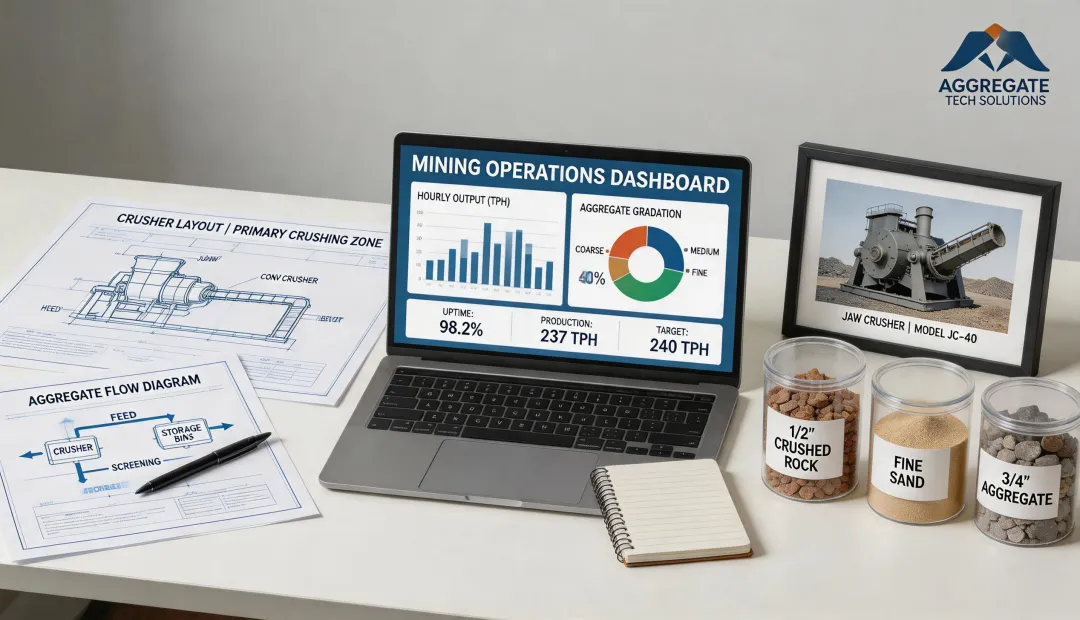
Alpine equipment is no different. A crusher, a pump, a drill—whatever you're buying—the sticker price tells you almost nothing. You need the cost per operating hour, the expected maintenance intervals, the downtime risk, and the cost of a spare part when you need it in a hurry.
Here's where I admit a rookie mistake. In my first year, I selected a lower quote because the line item price looked great. I didn't calculate lead time, service visit fees, or the downtime risk. That 'cheap' unit ended up costing us 22% more over two years. I still have the spreadsheet. It sits in the same folder as every purchase order I've ever signed.
2. Precision beats keywords
Print buyers don't ask for 'nice resolution.' They specify 300 DPI at final size—the commercial print standard. Why? Because vagueness creates variability. Procurement should work the same way.
If you ask a supplier, 'Is it reliable?' they'll say yes. If you ask, 'What is the mean time between failures in this operating environment?' they have to think. If they can't answer, that's a red flag. Not a maybe. A red flag.
The same logic applies to performance data. I don't want a brochure. I want the equipment equivalent of 'jones jr stats': actual numbers, by season, not just one good game. Show me uptime, repair history, and the conditions those numbers came from. Then we can talk.
And if a vendor says 'dependable' but can't define it, I know exactly who I'm dealing with. Someone who never worked in a facility where 'dependable' is measured in minutes of downtime, not adjectives.
3. Support beats specifications
When I searched for 'alpine musicsafe pro review' a few weeks ago, I wasn't looking for hearing protection. I was looking for a hydraulic component and ended up on a product review page. Different Alpine. Same name. It took five minutes to get back on track.
That kind of confusion is why I've stopped relying on brand alone. The brand doesn't service your equipment. The dealer does. The distributor does. The manufacturer's technical support does. And those people are part of the product.
I learned this through a communication failure. I told a supplier 'as soon as possible.' They heard 'whenever.' Result: a part arrived eight days late. Since then, we write exact dates and penalties into the order. Sounds basic. It wasn't—it was a process change.
So when you compare Alpine equipment, don't just compare the machine. Compare the support response time, the spare parts guarantee, the training, and the service contract. That's what 'Alpine' should mean to you.
But isn't the lowest price the safest price?
No. That's the thing. We all know it, and yet we still fall for it.
If a low quote can't survive a TCO calculation, it's not low. It's expensive with extra steps.
To be fair, not every 'cheap' option fails. Some are genuinely good value. But 'good value' is a calculation, not a feeling. You have to run the numbers.
Bottom line
If you search 'tires' and get rubber, that's search doing its job. If you search 'Alpine' and get a random mix, that's search doing exactly what keyword search is supposed to do. It gave you pages that contain the word. It can't know that you meant a mining equipment vendor, not a pest control product or a set of winter tires.
That's not an excuse to give up on search. It's a reason to take procurement back into your own hands. Define your spec. Build your TCO model. Ask for proof. And if a vendor can't give you numbers, that's your answer.
The market has changed. The search results are noisier. The product lines are more complicated. But the fundamentals—total cost, reliability, and support—haven't moved. The sooner we treat search results as noise rather than direction, the better.
And if you're still asking 'what is breakfast,' you're asking the wrong question. In procurement, the question is: 'What is the total cost of ownership?'